

From sound wave to the brain
Hearing starts with a sound wave, a vibration in the atmosphere which could be generated by wind, speech or the sound of a hammer, for example. This vibration moves the air particles around it, which then transmit it through the air as a sound wave.
When the sound wave reaches your ear, it is conducted down the ear canal to the ear drum. The ear drum vibrates in reaction to the impact of the sound wave, and this vibration is transmitted through the middle ear via three very small bones. The last bone in the chain, the stapes, transmits the vibrations to the fluid in the inner ear and into the delicate snail-like structure known as the cochlea.
In the cochlea, the movement of the fluid sets thousands of hair cells in motion, which is then translated into nerve impulses. These travel along the auditory nerve to the auditory cortex in the brain, which is responsible for translating the impulses into recognisable sounds such as words, music or the wind. Any breakdown in this complex system can cause a hearing loss.
Types of hearing loss
Hearing loss can be described as conductive, sensorineural or mixed.
- Conductive: due to a problem with the outer or middle ear which prevents sound from reaching the cochlea. A common example is a middle ear infection. These losses are often medically or surgically treatable.
- Sensorineural: also called "nerve" loss, this is the most common type of loss detected and describes a problem with the inner ear or the acoustic nerve. It is usually permanent and can be assisted with hearing aids or a cochlear implant.
- Mixed: a combination of the two.
For more detail, see causes and types of hearing loss.
Reading an audiogram
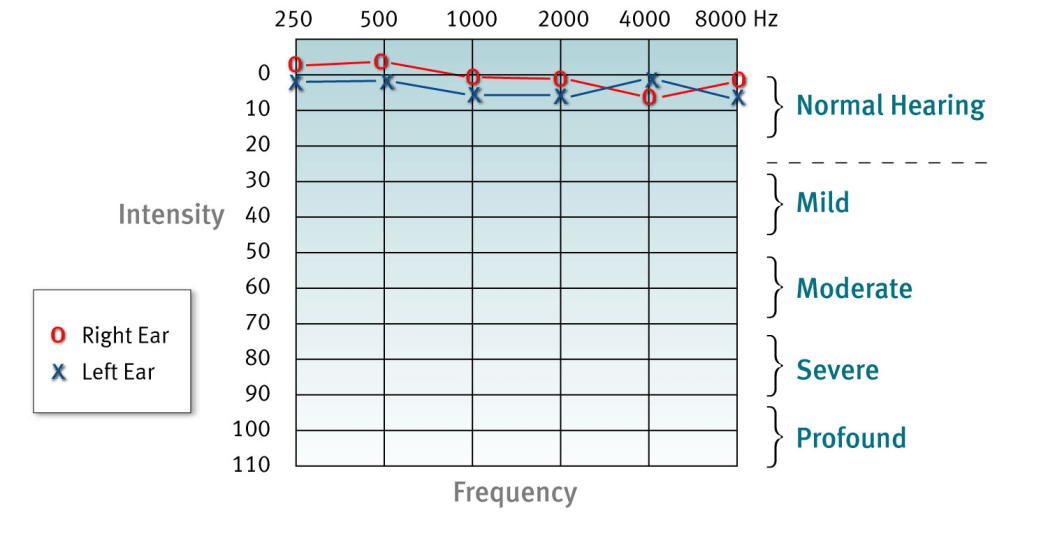
An audiogram is where an audiologist marks down the results of a hearing test. Hearing levels can be described as falling into the ranges marked along the side.